
In 2026, ESG compliance for Toronto commercial properties has moved from a “nice-to-have” marketing buzzword to a fundamental financial requirement. With the City of Toronto’s aggressive “Net Zero by 2040” strategy and the implementation of Version 5 of the Toronto Green Standard (TGS), owners of office, industrial, and retail assets are facing a new reality: comply or face the “brown discount.”
Here is the comprehensive breakdown of what you need to know about navigating ESG in the current Toronto market.
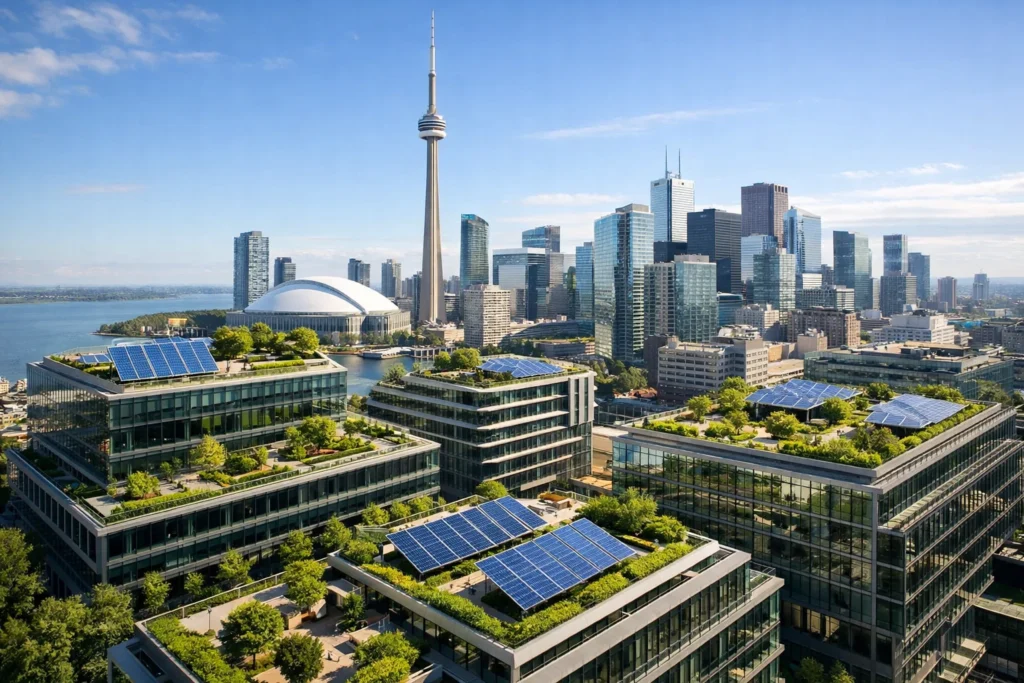
The Current ESG Landscape in Toronto
Recent data shows that Toronto buildings with high ESG ratings (LEED Gold/Platinum or BOMA BEST) are commanding a 7% to 12% rent premium over non-certified buildings. Conversely, assets that fail to meet 2026 energy benchmarking standards are seeing valuation haircuts of up to 15%.
Key 2026 Requirements:
- Energy Reporting: Mandatory annual reporting of energy and water consumption (EWRB) for buildings over 50,000 sq. ft.
- Carbon Caps: New emissions limits for large buildings, with potential fines for non-compliance.
- TGS Version 5: Stricter performance measures for new developments and major retrofits
The Financials: Costs vs. ROI
While the upfront cost of an ESG retrofit can range from $5 to $15 per square foot, the long-term ROI is undeniable:
- Operating Savings: Energy retrofits (LED, HVAC automation) typically yield 20%–30% savings on utility bills.
- Lower Vacancy: ESG-compliant spaces lease 20% faster in the current Toronto “flight to quality” market.
- Financing: Preferential interest rates (0.25%–0.50% lower) are increasingly available for “Green Loans.”
Toronto Case Studies: Real Results
1. Class B Office Retrofit (Downtown Toronto)
- Project: HVAC upgrade and smart sensor installation in a 1980s-era building.
- Cost: $450,000.
- Result: Energy consumption dropped by 28%. Occupancy increased from 78% to 94% within 14 months.
- ROI: Full payback achieved in 3.2 years.
2. Industrial Warehouse (Mississauga/GTA)
- Project: Rooftop solar array and LED lighting overhaul.
- Cost: $1.2M (partially offset by federal incentives).
- Result: The building now generates 15% more power than it consumes, selling excess back to the grid.
- ROI: Increased property valuation by $2.1M.
3. Mixed-Use Development (Vaughan)
- Project: Implementation of rainwater harvesting and high-performance building envelope.
- Cost: 4% increase in total construction budget.
- Result: Attained LEED Gold status; achieved record-breaking PSF lease rates for the submarket.
90-Day ESG Implementation Action Plan
| Timeline | Action Item |
| Day 1-30 | Energy Audit: Conduct a Level 2 ASHRAE audit to identify high-waste areas. |
| Day 31-60 | Certification Path: Select between LEED, BOMA BEST, or Fitwel based on your asset type. |
| Day 61-90 | Quick Wins: Execute low-cost upgrades (LEDs, smart thermostats) and begin EWRB reporting. |
Contact Allen Mayer: 25+ Years of Expert Guidance
Navigating ESG compliance for Toronto commercial properties requires more than just technical upgrades; it requires a strategic partner who understands how these changes impact your lease agreements and asset value. With over 25 years of experience in the Toronto commercial market, Allen Mayer helps owners and tenants turn compliance into a competitive advantage.
Ready to future-proof your investment? Contact Allen Mayer today to discuss your ESG strategy and maximize your property’s ROI.