
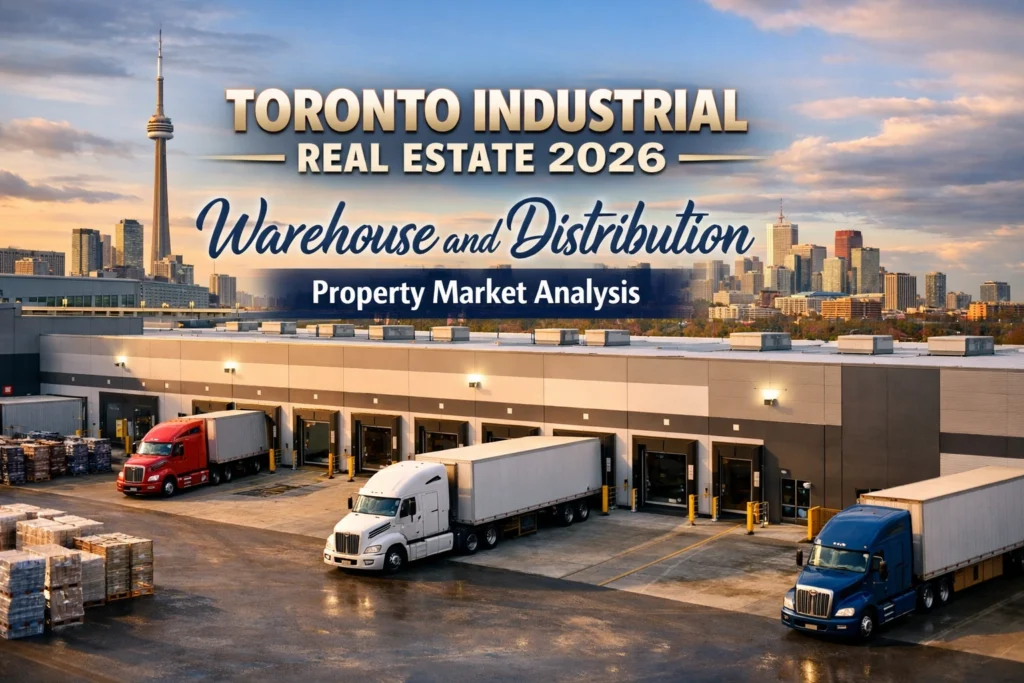
Toronto’s industrial real estate sector continues demonstrating exceptional resilience and growth, establishing itself as one of Canada’s most robust commercial property markets. As businesses adapt supply chains, expand e-commerce fulfillment, and optimize distribution networks, Toronto industrial real estate remains in high demand across the Greater Toronto Area’s diverse submarkets.
The Toronto Industrial Market: 2026 Landscape
Toronto industrial real estate encompasses warehouse, distribution, manufacturing, and logistics properties spanning from urban infill locations to suburban business parks. The market’s strength reflects several converging factors:
E-Commerce Growth: Online retail expansion drives sustained demand for warehouse and fulfillment center space. Companies require strategically positioned facilities capable of rapid order processing and delivery to Toronto’s dense urban population.
Supply Chain Optimization: Businesses increasingly recognize that proximity to major markets justifies premium industrial rents. Toronto’s position as Canada’s largest metropolitan area makes it essential for distribution networks serving Ontario and broader Canadian markets.
Limited Supply: Developable industrial land in Toronto proper has become scarce, constraining new supply while demand continues growing. This supply-demand imbalance supports rental rate appreciation and property value growth.
Infrastructure Advantages: Toronto’s extensive highway network, proximity to Pearson International Airport, and access to rail and port facilities create logistics advantages that few North American markets can match.
For businesses seeking industrial properties for rent or lease in Toronto, understanding these market dynamics is essential for successful property searches and negotiations. Allen Mayer’s expertise in industrial properties throughout the GTA provides strategic guidance for tenants and buyers navigating this competitive market.
Warehouse Space Types and Classifications
Toronto warehouse space serves diverse business requirements across multiple property classifications:
Class A Industrial Buildings: Modern facilities constructed within the past 15 years featuring clear heights exceeding 30 feet, ESFR sprinkler systems, energy-efficient building envelopes, and ample truck courts with multiple loading positions. These properties command premium rents but provide operational efficiency and lower ongoing costs.
Class B Industrial Properties: Functional buildings typically 15-30 years old with 24-28 foot clear heights and standard industrial infrastructure. These properties offer value pricing while supporting most distribution and light manufacturing operations.
Class C Industrial Space: Older facilities often requiring capital improvements but providing affordable entry points for businesses with modest spatial requirements or tight budget constraints.
Purpose-Built Distribution Centers: Large-scale facilities exceeding 200,000 square feet designed specifically for high-volume distribution operations. These properties feature extensive dock positions, cross-dock configurations, and automation infrastructure.
Flex Industrial Buildings: Versatile properties combining warehouse, office, and showroom functions. These buildings appeal to businesses requiring diverse space types within single locations.
Understanding which property class aligns with operational requirements and budget parameters helps businesses focus searches on appropriate opportunities.
GTA Industrial Submarkets and Strategic Locations
Industrial real estate in Toronto and the Greater Toronto Area encompasses multiple distinct submarkets, each offering unique advantages:
Toronto West: Areas including Etobicoke and Junction Triangle provide urban industrial space with excellent highway access via Gardiner Expressway and Highway 427. These locations appeal to businesses requiring Toronto proximity despite premium pricing.
Toronto East: Scarborough and East York industrial areas offer competitive rates with access to Highway 401 and DVP. These submarkets support diverse industrial uses from distribution to light manufacturing.
Mississauga: The GTA’s largest industrial market provides extensive inventory, competitive rates, and exceptional highway connectivity. Mississauga industrial properties particularly appeal to logistics and distribution operations.
Vaughan: Strategic location at Highway 400/407 interchange creates logistics advantages for northern GTA access. Vaughan industrial real estate offers modern facilities and competitive lease rates.
Brampton: Substantial industrial inventory with highway access and affordable rates compared to central Toronto locations. Brampton supports distribution, manufacturing, and warehousing across multiple sectors.
Pickering and Ajax: Eastern GTA submarkets provide value pricing with Highway 401 access, appealing to businesses serving Durham Region and eastern Ontario markets.
Each submarket serves different business profiles based on customer location, employee accessibility, and supply chain requirements. Strategic location selection significantly impacts operational efficiency and total occupancy costs.
Industrial Lease Rates and Market Conditions
Toronto industrial lease rates have appreciated substantially over recent years, reflecting strong demand and limited supply. Current market conditions show:
Urban Toronto Industrial: Prime locations in Etobicoke, Junction Triangle, and other Toronto proper submarkets command $18-$28 per square foot net for modern warehouse space. These premium rates reflect land scarcity and proximity to Toronto’s urban core.
Suburban GTA Industrial: Mississauga, Brampton, and Vaughan industrial properties typically range $14-$22 per square foot net depending on building quality, location, and configuration.
Outer GTA Markets: Durham Region and areas like Barrie offer industrial space from $8-$15 per square foot net, providing substantial cost savings for businesses willing to trade some Toronto proximity for affordability.
Build-to-Suit Rates: Custom industrial facilities often command $15-$25 per square foot net depending on specifications, lease term, and property location.
These rates typically exclude property taxes, insurance, and operating costs that tenants bear under triple-net lease structures common in industrial properties.
Beyond base rent, businesses should evaluate:
Operating Cost Pass-Throughs: Property taxes, insurance, and common area maintenance add $3-$8 per square foot annually depending on location and building type.
Tenant Improvement Costs: Industrial space often requires minimal improvements compared to office properties, but specialized needs like refrigeration, enhanced electrical capacity, or racking systems can require substantial investment.
Lease Term Expectations: Landlords typically prefer 5-10 year lease terms for industrial properties given construction costs and market conditions. Longer terms often secure better rental rates.
Warehouse Design and Operational Considerations
Successful warehouse and distribution operations require facilities designed for efficient goods movement and storage:
Clear Height: Modern distribution operations typically require minimum 28-30 foot clear heights to maximize racking efficiency. High-velocity fulfillment operations may require 32+ foot clearances for mezzanine levels and advanced storage systems.
Column Spacing: Wide column bays (50+ feet) provide flexibility for racking layouts and material handling equipment operation. Narrow spacing constrains layout options and operational efficiency.
Loading Infrastructure: Adequate dock doors and truck courts are essential. Typical ratios provide one dock door per 10,000-15,000 square feet of warehouse space, though distribution operations may require higher ratios.
Floor Loading Capacity: Industrial floors should support anticipated racking, inventory, and equipment loads. Standard floors support 125-150 pounds per square foot, while heavy industrial uses may require 200+ pounds per square foot capacity.
Power Infrastructure: Electrical capacity must support HVAC, lighting, material handling equipment, and specialized operations like refrigeration or manufacturing processes.
Fire Suppression: ESFR (Early Suppression Fast Response) sprinkler systems allow higher racking than conventional sprinklers, maximizing cubic footage utilization.
Building Envelope: Energy-efficient walls, roofs, and doors reduce operating costs while supporting temperature control for sensitive products.
Businesses should evaluate properties against operational requirements rather than accepting standard configurations that may constrain efficiency.
E-Commerce and Fulfillment Facility Requirements
The e-commerce boom has created specialized facility requirements for fulfillment and last-mile distribution operations:
Location Proximity: Urban fulfillment centers must position within strategic distances of customer concentrations to support same-day or next-day delivery commitments. Toronto proper and close suburbs command premiums for this positioning.
Building Configuration: High-velocity picking operations favor wide, shallow building footprints that minimize picker travel distances. Traditional deep warehouse configurations may not optimize for these operations.
Automation Infrastructure: Modern fulfillment increasingly incorporates conveyor systems, automated storage and retrieval, and robotic picking. Facilities must provide adequate power, floor loading capacity, and ceiling height for these systems.
Returns Processing: E-commerce generates substantial returns requiring dedicated space for inspection, restock, and disposal processing.
Labor Accessibility: Fulfillment centers require substantial workforce that must reach facilities via public transit or employee vehicles. Properties near transit infrastructure and residential areas support staffing requirements.
Companies establishing fulfillment networks should work with commercial real estate professionals experienced in these specialized requirements.
Industrial Property Investment Opportunities
Toronto industrial real estate provides compelling investment opportunities across multiple strategies:
Core Income Properties: Stabilized warehouse buildings with creditworthy tenants on long-term leases provide predictable cash flows. These properties appeal to investors prioritizing income stability.
Value-Add Industrial: Older properties requiring repositioning, renovation, or tenant upgrade present opportunities for enhanced returns through active management.
Development and Build-to-Suit: Land development or build-to-suit projects allow investors to create modern facilities meeting specific market demand. These strategies carry higher risk but offer substantial upside.
Industrial Conversions: Adaptive reuse of older manufacturing or warehouse buildings for modern logistics uses can generate value through repositioning.
Sale-Leaseback Opportunities: Industrial users owning facilities can unlock capital through sale-leaseback while maintaining operational control.
Investment analysis should consider:
Location Fundamentals: Highway access, labor availability, and proximity to customer markets drive long-term property value and tenant demand.
Building Quality and Obsolescence Risk: Modern facilities with efficient configurations and systems command higher rents and appreciation while older buildings face obsolescence as tenant requirements evolve.
Tenant Credit and Lease Terms: Single-tenant industrial properties carry concentration risk offset by long lease terms with creditworthy occupants.
Market Supply-Demand Dynamics: Understanding development pipeline and absorption trends helps predict rental rate trajectories and property appreciation.
Allen Mayer’s investment analysis expertise helps buyers evaluate industrial properties against these criteria. Explore current industrial property listings throughout Toronto and the GTA.
Navigating Industrial Lease Negotiations
Securing favorable industrial lease terms requires understanding landlord motivations and market conditions:
Base Rent and Escalations: Negotiate competitive initial rates based on comparable transactions. Understand whether annual escalations are fixed, CPI-indexed, or fair market value resets.
Tenant Improvement Allowances: While industrial properties require less customization than office space, specialized needs may justify improvement allowances. Negotiate adequate funding for business-specific requirements.
Lease Term and Renewal Options: Balance commitment length against business uncertainty. Industrial landlords prefer longer terms given property development costs and financing requirements.
Operating Cost Controls: Cap annual increases in controllable operating costs to limit exposure to management inefficiencies or discretionary spending.
Expansion and Contraction Rights: Negotiate rights to expand into adjacent space if available, or contract space if business circumstances change.
Assignment and Sublease Rights: Preserve flexibility to assign leases or sublease space subject to reasonable landlord approval processes.
For comprehensive negotiation guidance, review Allen Mayer’s article on commercial lease negotiation strategies applicable to industrial transactions.
Supply Chain and Logistics Trends Impacting Industrial Demand
Several trends continue driving Toronto industrial property demand:
Nearshoring and Supply Chain Resilience: Companies increasingly prioritize supply chain reliability over cost minimization, favoring North American manufacturing and distribution. This trend supports industrial demand across Toronto and southern Ontario.
Inventory Positioning: Just-in-time inventory models have given way to safety stock strategies that require additional warehouse space. Businesses maintain larger on-hand inventories to buffer against supply disruptions.
Omnichannel Retail: Retailers supporting both e-commerce and physical stores require distribution networks serving multiple channels. This complexity drives warehouse space demand and specialized facility requirements.
Cold Chain and Food Distribution: Growing demand for fresh and prepared foods delivered directly to consumers requires refrigerated warehouse and distribution infrastructure.
Reverse Logistics: Product returns, recycling, and circular economy initiatives create demand for facilities processing returned goods and recovered materials.
These trends suggest sustained industrial property demand supporting rental growth and property appreciation across the Toronto market.
Environmental and Sustainability Considerations
Industrial property users and investors increasingly prioritize environmental performance:
Energy Efficiency: Modern warehouse buildings incorporate LED lighting, high-efficiency HVAC systems, and enhanced building envelopes reducing operating costs and environmental impact.
Solar Installation Potential: Large warehouse roofs provide excellent platforms for solar power generation. Some industrial landlords install solar systems reducing tenant energy costs while generating renewable energy credits.
EV Charging Infrastructure: Fleet electrification drives demand for vehicle charging capacity at warehouse facilities. Properties with adequate electrical infrastructure support this transition.
LEED and Green Building Certification: Some tenants require certified sustainable buildings to meet corporate environmental commitments.
Location Efficiency: Urban industrial properties reduce freight distances and support last-mile delivery efficiency, lowering transportation emissions.
Businesses should evaluate properties against sustainability goals that increasingly influence real estate decisions.
Working with Industrial Real Estate Specialists
Navigating Toronto’s industrial property market benefits substantially from experienced professional guidance:
Market Intelligence: Understanding current rates, available properties, and emerging submarkets helps businesses identify optimal opportunities.
Off-Market Properties: Many industrial properties never reach public marketing. Broker relationships provide access to opportunities before broad market exposure.
Lease Negotiation: Expertise in industrial lease structures, market terms, and negotiation tactics secures favorable conditions.
Site Selection Analysis: Evaluating locations against operational requirements including labor access, customer proximity, and logistics efficiency ensures alignment with business strategies.
Transaction Coordination: Industrial property transactions involve complex considerations across legal, environmental, zoning, and financial dimensions requiring professional coordination.
Allen Mayer’s 25+ years specializing in Toronto commercial real estate provides industrial tenants and buyers with strategic advantages throughout transaction processes.
Take Action on Toronto Industrial Opportunities
Toronto’s industrial real estate market offers strong fundamentals supporting both tenant operations and investor returns. Whether you’re seeking warehouse space for lease, evaluating industrial properties for purchase, or developing distribution facility strategies, the market provides diverse opportunities.
Understanding market dynamics, property types, and negotiation strategies positions businesses and investors for success. Working with experienced commercial real estate professionals like Allen Mayer ensures access to market intelligence, off-market opportunities, and strategic guidance.
Ready to explore Toronto industrial real estate opportunities? Contact Allen Mayer today to discuss your specific requirements and discover how Toronto’s industrial market can support your business or investment goals.
For companies also evaluating other GTA industrial markets, explore opportunities in Mississauga, Vaughan, and Barrie to compare locations and identify optimal industrial property solutions.
Visit Allen Mayer’s homepage to learn more about industrial real estate services and explore current listings across the Greater Toronto Area.