
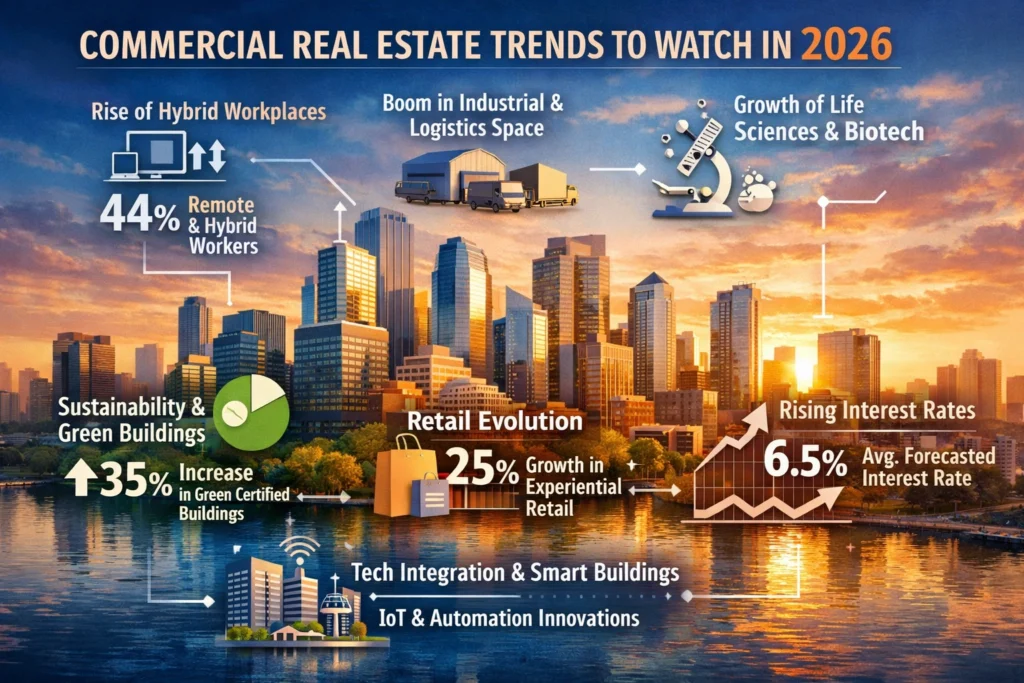
Commercial real estate continues to evolve — driven by shifting tenant preferences, sustainability priorities, technology adoption, and investment behaviors that shape how properties are bought, leased, and repurposed. As we enter 2026, industry fundamentals remain solid, even as certain sectors adapt and innovate. Here’s a breakdown of the top trends property owners, investors, and brokers need to watch.
Why 2026 Is a Pivotal Year for Commercial Real Estate
2026 is poised to be transformative for commercial property markets. After years of economic uncertainty and shifting demand patterns, recent outlooks show growth across industrial, retail, and multifamily sectors, while office and mixed-use spaces evolve. Understanding these trends is key for informed investment and strategic planning.
Industrial & Multifamily Continue to Lead Growth
Industrial real estate remains one of the strongest performing asset classes. Fueled by ecommerce logistics, distribution needs, and ongoing robust demand for warehouse space, industrial properties continue to see solid interest from investors and occupiers alike. Likewise, multifamily markets show resilience as housing demand persists.
Retail Sector Momentum and Resilience
Contrary to past narratives about retail decline, many retail segments are thriving — especially grocery-anchored and neighborhood shopping centers where physical foot traffic remains strong. Limited new supply and improved consumer demand support healthy valuations in 2026.
Office Market Evolution: Adaptation & Reuse
While office occupancy faced challenges earlier in the decade, 2026 sees greater focus on adaptive reuse and modern workspace design. Transforming outdated office stock into residential or mixed-use spaces is gaining traction, reshaping urban property landscapes and maximizing asset value.
Sustainability and ESG in Commercial Property
Environmental, social, and governance (ESG) criteria are no longer optional — tenants and investors increasingly seek properties with sustainability features and certifications. Buildings with energy-efficient systems, wellness-focused amenities, and green credentials are seeing stronger demand.
Tech, Data, and Innovation Impacting CRE
Technology is reshaping how commercial real estate operates — from data-driven market analytics and smart building systems to digital platforms that streamline leasing and investment processes. Embracing these innovations gives stakeholders a competitive edge.
What Investors Should Watch
Investors should focus on:
- Last-mile logistics and urban industrial properties
- Mixed-use developments for diversified returns
- Sustainability-driven assets with tenant appeal
- Tech enabled property management tools
These areas are trending as capital flows adapt to new market realities.
Conclusion: Positioning for Success in 2026
Commercial real estate in 2026 isn’t static — it’s dynamic, diverse, and open to strategic innovation. By staying informed on key trends above, property professionals and investors can position themselves for better outcomes in leasing, acquisitions, and asset management.
For deeper insights into current market shifts, read our latest 2026 Market Alert: Why Ontario Industrial & Commercial Real Estate is Hitting a “Boiling Point.” This detailed update explores pricing pressure, rising demand, and what it means for investors and tenants across the province. If you’re actively searching for opportunities, browse our latest listings to discover available commercial properties, or contact Allen directly for expert guidance and tailored advice in the Toronto and GTA market.